


Introduction
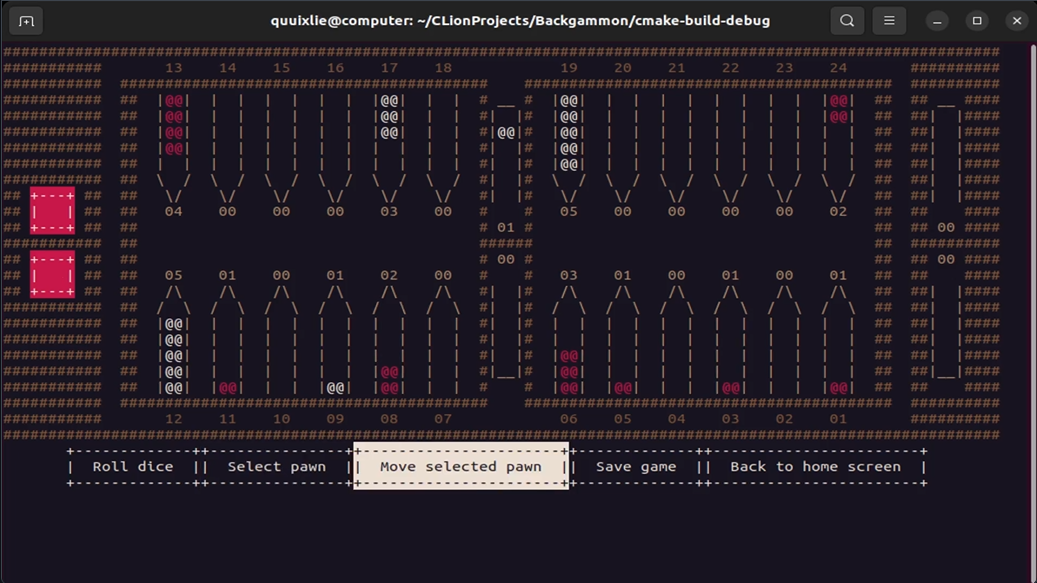
This game was written during my first year of computer science studies as a way to practice basic programming concepts and explore game logic. It recreates the classic board game Backgammon with simple terminal-based graphics, with slightly modified rules based on the professor’s assignment guidelines.
How to Play Backgammon
Backgammon is a two-player strategy game played on a board with 24 narrow triangles called points. Each player has 15 checkers and moves them according to the roll of two dice. The goal is to move all your checkers into your home board and then “bear them off” (remove them from the board) before your opponent does.
Players move in opposite directions around the board. A roll of the dice determines how far the checkers can move. If a checker lands on a point occupied by a single opponent checker, that checker is “hit” and placed on the bar, meaning it must re-enter the game from the opponent’s home board.
Strategy involves blocking your opponent’s moves, protecting your own checkers, and timing your advances carefully. The first player to bear off all their checkers wins the game.
What I Learned
While creating this Backgammon game, I gained valuable experience in C programming and working with the ncurses library for terminal-based user interfaces. I learned how to handle user input, manage game state, and implement board logic efficiently. The project also taught me about debugging, structuring larger programs, and designing interactive menus.
During development, I also encountered a few programming errors that I would now correct, such as not hiding external libraries behind their API (e.g., move(), printw()), removing magic numbers, and other smaller issues. Overall, it was a great exercise in combining algorithmic thinking with practical interface design.
Project Link
You can check out the full source code of this project on GitHub.